|
Apr 8, 1896
|
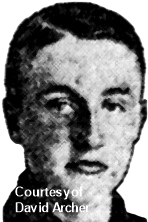
Born in London, England to Charles and Mildred
(nee Webb) Longstaff
|
|
May 29, 1913
|
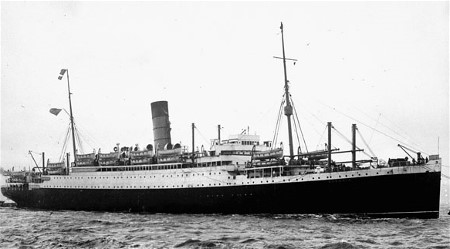
Embarked the SS Ausonia in Southampton with his mother and 3
siblings
|
|
Jun 9, 1913
|
Disembarked in Montreal, Quebec and proceeded to
Toronto, Ontario to join his father
|
|
Mar 17, 1915
|
Shown on the payroll of the 45th
Victoria Regiment in Lindsay, Ontario
|
|
Mar 19, 1915
|
Attested into the 39th Battalion CEF
in Lindsay, Ontario
Ø Number 412934
Ø Next of kin given as Charles
Longstaff, 16 Muriel Ave., Toronto, Ontario
Ø Previous occupation given as
Labourer
o Later noted as Hospital
Orderly
Ø No previous military
experience given
Ø Religion given as Church of
England
Ø Posted to “A” Company
The battalion trained in the Belleville, Ontario
area
|
|
Jun 17, 1915
|
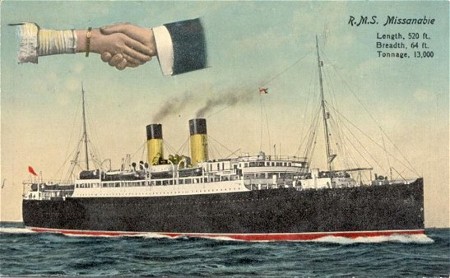
Embarked the SS Missanabie in Montreal, Quebec
|
|
Jul 3, 1915
|
Disembarked in Plymouth, England and proceeded to
Shorncliffe and then on to Lydd to continue training
|
|
Sep 24, 1915
|
The 39th Battalion moved to West
Sandling for further training
|
|
Nov 9, 1915
|
Transferred to the 21st Battalion
|
|
Nov 10, 1915
|
Arrived at the CBD (Canadian Base Depot) in the
Rouelles Camp, Havre, France and Taken On Strength of the 21st
Battalion
|
|
Nov 14, 1915
|
After leaving the base depot, Private Longstaff
joined the 21st Battalion resting in Ridgewood, Belgium and was
posted to “D” Company
|
|
Jan 14, 1916
|
Admitted to the No. 5 CFA (Canadian Field
Ambulance) with a diagnosis that reads Impetigo in his left arm
|
|
Jan 16, 1916
|
Transferred to the Division Rest Station in
Godewaersvelde, France
|
|
Jan 26, 1916
|
Transferred to the North Midland British Casualty
Clearing Station in Mont des Cats, France
|
|
Feb 4, 1916
|
Discharged from hospital care and rejoined the 21st
Battalion in the front line trench near Voormezeele, Belgium
|
|
Jun 10, 1916
|
While on a work party on the Ypres Salient in
Belgium, Private Longstaff suffered shell shock when the workers were
subjected to an enemy artillery barrage.
He was evacuated to the No. 5 Canadian Field Ambulance for first
aid. He was transported the same day
to the No. 4 Canadian Field Ambulance
|
|
Jun 11, 1916
|
Transferred to the No. 2 Division Rest Station
|
|
Jun 18, 1916
|
Discharged from hospital care and rejoined the 21st
Battalion in Bedford House, Belgium
|
|
Jul 22, 1916
|
Sentenced to 10 days Field Punishment No. 1 for
being absent from fatigue duty without permission
|
|
Sep 15, 1916
|
During the capture of the sugar factory south of
Courcelette, France, Private Longstaff was reported to be Missing In
Action. In fact, he was suffering from
Shell Shock and had been taken to the No. 6 CFA (Canadian Field Ambulance)
for first aid before being transported to a casualty clearing station
|
|
Sep 20, 1916
|
Transported to the No. 8 Canadian Field Ambulance
|
|
Sep 23, 1916
|
Private Longstaff was discharged from hospital
care and rejoined the 21st Battalion in La Vicogne, France
|
|
Oct 14, 1916
|
Admitted to the No. 6 Canadian Field Ambulance
with abrasions to his feet
|
|
Oct 15, 1916
|
Discharged from hospital care and rejoined the
battalion in Divion, France
|
|
Oct 16, 1916
|
Attached to the 4th Canadian Trench
Mortar Battery for duty
|
|
Jun 12, 1917
|
Admitted to the No. 4 Canadian Field Ambulance
with a diagnosis that reads ICT (Inter Connective Tissue) infection in his
right leg
|
|
Jun 13, 1917
|
Transported to the No. 6 Casualty Clearing
Station
|
|
Jun 21, 1917
|
Discharged from hospital care and rejoined the trench
mortar battery
|
|
Oct 2, 1917
|
Transferred to the 4th Canadian Trench
Mortar Battery
|
|
Jan 23, 1918
|
Granted 14 days leave
|
|
Feb 10, 1918
|
Rejoined trench mortar battery from leave
|
|
Jul 22, 1918
|
Admitted to the No. 2 Canadian Field Ambulance
with a diagnosis that reads Bronchitis
|
|
Jul 30, 1918
|
Transported to the No. 14 Canadian Field
Ambulance
|
|
Aug 29, 1918
|
Discharged from hospital care and rejoined the
trench mortar battery
|
|
Oct 26, 1918
|
Admitted to the No. 12 Canadian Field Ambulance
with a diagnosis that reads Bronchitis and Pleurisy. He was transported the same day to the No.
14 Canadian Field Ambulance
|
|
Nov 4, 1918
|
Transported to the No. 13 Canadian Field
Ambulance
|
|
Nov 10, 1918
|
Discharged to duty from hospital care and
rejoined the trench mortar battery
|
|
Nov 14, 1918
|
Transferred back to the 21st Battalion
|
|
Dec 13, 1918
|
The 21st Battalion led the 2nd
Canadian Division across the Bonn Bridge to enter Germany as part of the
Occupying Force and proceeded to Siegburg

|
|
Jan 15, 1919
|
Granted 14 days leave to England
He failed to return from leave and was declared
to be AWL (Absent Without Leave)
|
|
Feb 13, 1919
|
Transferred to the EORD (Eastern Ontario
Regimental Depot) for pay purposes on being admitted to the No. 14 Canadian
General Hospital in Eastbourne with a diagnosis that reads Influenza
|
|
Feb 27, 1919
|
Discharged from hospital
|
|
Mar 21, 1919
|
Arrived at the CGBD (Canadian General Base Depot)
in Etaples and taken prisoner as an absentee.
He then proceeded to rejoin the 21st Battalion. There is no punishment recorded in his file
for his absence
|
|
Apr 3, 1919
|
Embarked the Western Australia in Havre, France
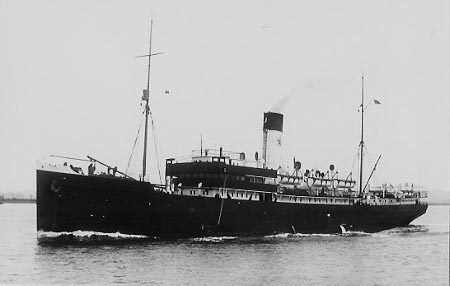
On arrival in England, he was attached to “P”
Wing in Witley pending return to Canada
|
|
May 14, 1919
|
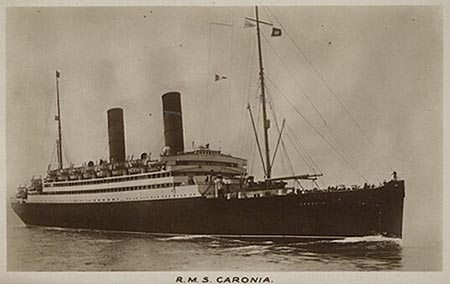
Embarked the SS Caronia in Liverpool
|
|
May 22, 1919
|
Disembarked in Halifax, Nova Scotia and proceeded
to Kingston, Ontario by train
|
|
May 24, 1919
|
Discharged from the CEF in Kingston, Ontario
Ø Rank on discharge Private
Ø War Service Badge Class “A”
issued number 279993
Ø Proposed residence on
discharge 66 Kent Road, Scarborough, Toronto, Ontario
Following his discharge, the 1914-15 Star,
British War Medal and Victory Medals were sent to him at 30 Millbrook Cr.,
Toronto, Ontario
|
|
May 17, 1922
|
Married to Frances Maud Shane in Toronto, Ontario
|
|
Jul 25, 1950
|
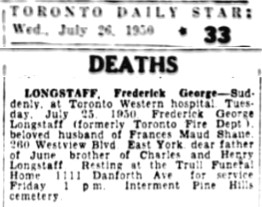
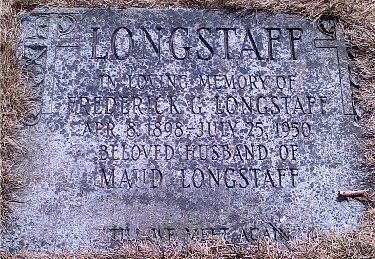
Frederick George Longstaff died while a patient
in the Toronto Western Hospital, of a Cerebral Haemorrhage and was buried in
the Pine Hills Cemetery in Toronto, Ontario
|
|