|
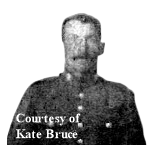
Feb 19, 1877
|
Born in Belleville, Ontario to Alexander and
Martha (nee Kiser) Rushlow
There is some confusion as to his actual birth
year as he gave differing birth years ranging from 1877 to 1883. This may be in part due to the fact that he
could not read or write.
|
|
Mar 6, 1899
|
Married to Lillian Brown in Belleville, Ontario
|
|
Jun 13, 1916
|
Attested into the 155th Battalion CEF
in Belleville, Ontario
Ø Number 637172
Ø Next of kin given as Lillian
Rushlow, wife, 192½ Church St., Belleville, Ontario
Ø Previous occupation given as
Labourer
Ø Previous military experience
given as 15th Battalion, Argyll Light Infantry for 13 years in
Belleville, Ontario
Ø Religion given as Church of
England
Louis Rushlow could not read or write and signed
his papers with an “X” and noted as “his mark”
The battalion trained in the Kingston, Ontario
area
|
|
Oct 17, 1916
|
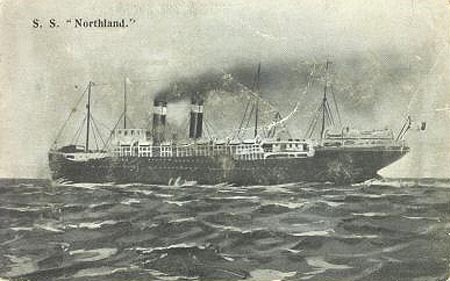
Embarked the SS Northland in Halifax, Nova Scotia
|
|
Oct 28, 1916
|
Disembarked in Liverpool, England and the
battalion proceeded to Bramshott
|
|
Dec 5, 1916
|
Transferred to the 21st Battalion
|
|
Dec 6, 1916
|
Arrived at the CBD (Canadian Base Depot) in the
Rouelles Camp, Havre, France and Taken On Strength of the 21st
Battalion
|
|
Dec 8, 1916
|
After leaving the base depot, Private Rushlow
joined the 21st Battalion in Bully Grenay, France
|
|
Mar 14, 1917
|
Admitted to the No. 2 CFA (Canadian Field
Ambulance) sick
|
|
Mar 15, 1917
|
Transported to the No. 6 Canadian Field Ambulance
and the diagnosis was changed to read Myalgia and placed in the CCRS
(Canadian Corps Rest Station)
|
|
Mar 22, 1917
|
Transported to the No. 22 CCS (Casualty Clearing
Station)
|
|
Mar 25, 1917
|
Transported via the No. 18 AT (Ambulance Train)
and admitted to the No. 1 Canadian General Hospital in Etaples, France
|
|
Apr 9, 1917
|
Invalided to England aboard the Hospital Ship
Newhaven
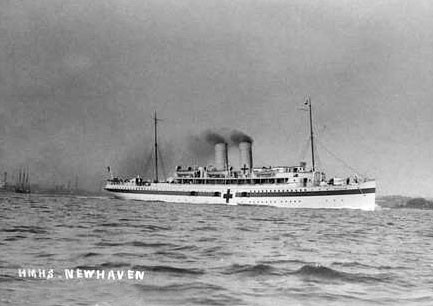
On arrival in England, he was admitted to the 1st
Southern General Hospital in Birmingham and DAH (Disordered Activity of the
Heart) was added to the diagnosis
Transferred to the EORD (Eastern Ontario
Regimental Depot) for pay purposes while in hospital
|
|
Jul 18, 1917
|
Transferred to the Canadian Convalescent Hospital
in Woodcote Park, Epsom
|
|
Aug 1, 1917
|
Attached to the 3rd CCD (Canadian
Command Depot) for physical training and exercise
|
|
Sep 11, 1917
|
Ceased to be attached to the command depot and
reported to the Eastern Ontario Regimental Depot in Seaford
|
|
Oct 4, 1917
|
Transferred to the 4th Canadian Labour
Battalion
Proceeded to France to join the 4th
Canadian Labour Battalion
|
|
Oct 6, 1917
|
Arrived at the CGB (Canadian General Base) Depot
in Etaples, France and Taken On Strength of the 4th Canadian
Labour Battalion
|
|
Oct 8, 1917
|
After leaving the base depot, Private Rushlow joined the 4th
Canadian Labour Battalion in Ypres, Belgium
|
|
Nov 5, 1917
|
Admitted to the No. 13 FA (Field Ambulance) with
a diagnosis that reads PUO (Pyrexia of Unknown Origin), sometimes referred to
as Trench Fever. He was transported
the same day to the No. 41 CCS (Casualty Clearing Station)
|
|
Nov 7, 1917
|
Transported via the No. 22 AT (Ambulance Train)
and admitted to the No. 2 Stationary Hospital in Abbeville, France
|
|
Dec 6, 1917
|
Transferred to the No. 5 Convalescent Depot in
Cayeux, France
|
|
Dec 14, 1917
|
Classified B1, meaning he was not fit for front
line duty
|
|
Dec 22, 1917
|
Reported to the Canadian Base Depot in Etaples,
France
|
|
Jan 31, 1918
|
After leaving the base depot, Private Rushlow
rejoined the 4th Canadian Labour Battalion in Souchez, France
|
|
Feb 27, 1918
|
Granted 14 days leave to England
|
|
Mar 5, 1918
|
Admitted to the 1st Southern General
Hospital in Birmingham while on leave with severe chills. This was later noted as Pleurisy
|
|
Mar 31, 1918
|
The 4th Canadian Labour Battalion was
reorganized into the 2nd Canadian Infantry Works Battalion
|
|
Apr 1, 1918
|
Discharged from hospital and his leave was
extended to April 8, 1918 to compensate for the time spent in hospital
|
|
Jun 20, 1918
|
Classified B1 meaning he was not fit for front
line duty
|
|
Aug 14, 1918
|
Admitted to the No. 60 Field Ambulance with an
inflamed mouth.
|
|
Aug 15, 1918
|
Transported to the No. 14 Canadian Field
Ambulance
|
|
Sep 10, 1918
|
After being discharged from the field ambulance,
Private Rushlow rejoined the 2nd Canadian Works Battalion in Vis
en Artois, France
|
|
Sep 13, 1918
|
Transferred to the 4th Canadian
Infantry Works Company in Vis en Artois, France
|
|
Jan 7, 1919
|
Proceeded to England and transferred to the
General Depot. On arrival in England,
he was attached to the 6th Reserve Battalion in Witley
|
|
Feb 9, 1919
|
Transferred to Military District No. 3 Wing in
Kinmel Park, Rhyl pending return to Canada
|
|
Feb 22, 1919
|
Embarked the SS Belgic in Liverpool

|
|
Mar 2, 1919
|
Disembarked in Halifax, Nova Scotia and proceeded
to Kingston, Ontario where he was Taken On Strength of Military District No.
3 Casualty Company
|
|
Mar 6, 1919
|
Granted leave until March 19, 1919
|
|
Mar 20, 1919
|
Medical exam at Kingston notes
1.
He
suffers from DAH (Disordered Activity of the Heart)
2.
This
is most likely caused by his suffering of Trench Fever at the front
3.
His
right wrist is weak and gets sore when lifting heavy objects
4.
When
he gets overheated, he gets dizzy
5.
Feet
and ankles swell occasionally
|
|
Mar 25, 1919
|
Discharged from the CEF in Kingston, Ontario
Ø Rank on discharge Private
Ø War Service Badge Class “A”
issued number 91048
Ø War Service Badge Class “B”
issued number C-55438
Ø Proposed residence on
discharge 93½ Church St., Belleville, Ontario
Following his discharge, the British War Medal
and Victory Medals were sent to him at 93½ Church St., Belleville, Ontario
|
|
Mar 24, 1931
|
His wife Lillian died in Belleville, Ontario
|
|
Sep 8, 1933
|
Married to Dora Manda Bedore in Belleville,
Ontario
|
|
Nov 29, 1955
|
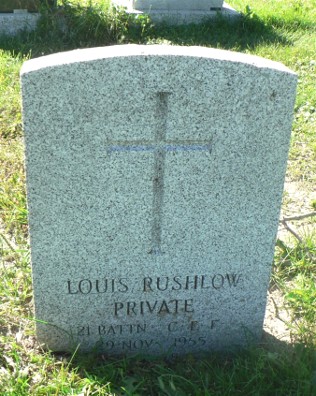
Louis Rushlow died and was buried in the
Belleville Cemetery, Belleville, Ontario
|
|